
 Dental
Dental Implants – Lincoln, NE
A Permanent Way to Rebuild Your Smile
These days, patients with missing teeth have more options than ever before to enjoy full smiles again. However, no tooth replacement comes close to the natural look and feel provided by dental implants. They recreate the root structure of teeth below the gums, enabling them to function exactly like real teeth while also lasting for 30+ years with the right care. Dr. Wesley Parks at Parks Family Dental works with a network of trusted dental implant specialists to ensure you receive the highest quality care every step of the way. Call us today to find out how dental implants from our Lincoln, NE dentist can complete your smile and transform your life!

Why Choose Parks Family Dental for Dental Implants?
- Partnered with the Best Dental Labs & Oral Surgeons in Lincoln
- 3D Scanning for Precise Dental Implant Treatment Planning
- Reasonable Pricing with Zero Hidden Fees
What Are Dental Implants?
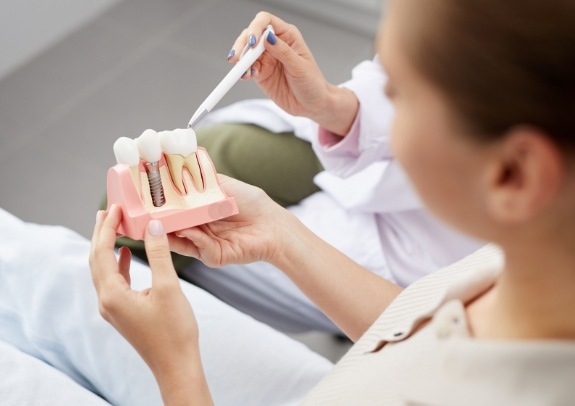
A dental implant is a small cylindrical post made from biocompatible materials, usually titanium or zirconia. After being surgically inserted into the jaw, the posts actually fuse with the surrounding bone in a months-long process called osseointegration. Not only does this stimulate blood flow to the jaw and prevent bone loss, but it also allows the implants to support a dental crown, bridge, or denture without the need for adhesives or altering your remaining teeth. Plus, this firm foundation allows dental implants to potentially last for several decades or even a lifetime.
The 4-Step Dental Implant Process
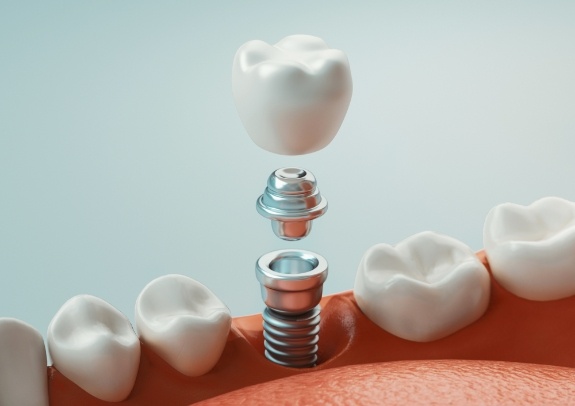
Every patient has a slightly different dental implant process, but you’ll typically experience four basic steps:
- Initial consultation – Dr. Parks will examine your mouth and discuss your smile goals to decide whether you’re a good candidate for dental implants.
- Dental implant surgery – We partner with experts across the Lincoln area for the surgical placement of the dental implants in your jaw.
- Osseointegration & abutment placement – Over the next few months, the implant posts integrate with your jawbone. Then, metal attachments called abutments are secured on top of your implants.
- Attaching your final restoration – Finally, we install your custom crown, bridge, or denture onto your abutments.
Benefits of Dental Implants

Thanks to their unique structure, dental implants boast many advantages over traditional tooth replacements, including:
- Stability – Instead of sitting on top of the gums, dental implants are embedded in thick bone tissue. You won’t have to worry about your teeth sliding around like you would with dentures.
- Aesthetics – Your final restoration will be customized to match the way your natural teeth looked, ensuring onlookers cannot tell the difference.
- Jawbone preservation – After a tooth is lost, that part of the jawbone loses stimulation and deteriorates, resulting in a sunken-in facial appearance that ages you. Dental implants strengthen the jawbone to keep you looking young.
- Longevity – With very little maintenance, you can expect your dental implants to last for 30 years or longer.
Who Dental Implants Can Help

Chances are that no matter how many teeth have been lost, most generally healthy adults can benefit from dental implants. However, the best way to find out if dental implants are right for you is to schedule a consultation with Dr. Parks. He can devise a treatment plan based on your degree of tooth loss.
Missing One Tooth
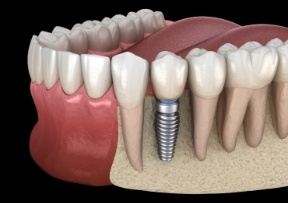
For a single missing tooth, an implant post is inserted vertically into the empty space, with a personalized dental crown secured on top. This solution seamlessly fills the gap without relying on your remaining teeth for support.
Missing Multiple Teeth
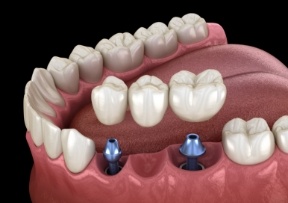
Three or more missing teeth in a row can be brought back by placing a dental implant at each end of the space and installing a dental bridge on top. Implant bridges can last twice as long as traditional ones, and they don’t require any enamel to be removed from your natural teeth. For several missing teeth at various spots along an arch, a small number of implants can provide ample support for a partial denture.
Missing All Teeth
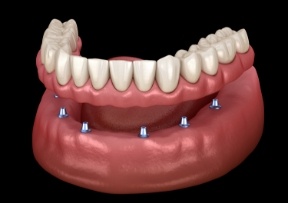
Dental implants can even support a full denture. In most cases, it only takes four to eight posts that are positioned strategically along the jaw. Implant dentures solve many of the common problems of regular dentures; they don’t slip, they make chewing easy, they can be brushed and flossed like natural teeth, and they can last for decades to come.
Understanding the Cost of Dental Implants
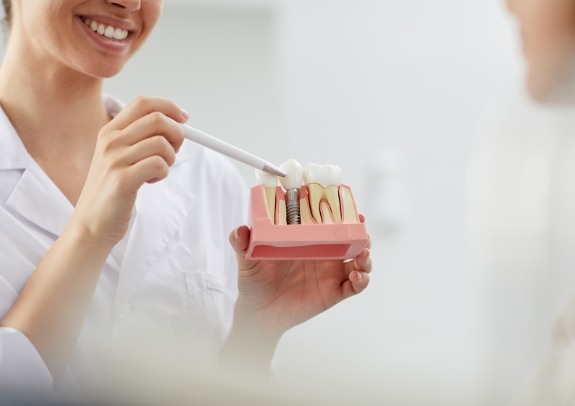
Because each patient has a completely unique treatment, there isn’t a fixed amount that you can expect to pay for dental implants. We have to consider multiple factors, such as the number of teeth you’re missing and whether you need any preparatory work before dental implant surgery. Our Parks Family Dental team can explain all of these factors to you and how they impact your total costs. We can also explore your financing options.
Maintaining & Caring for Your Dental Implants
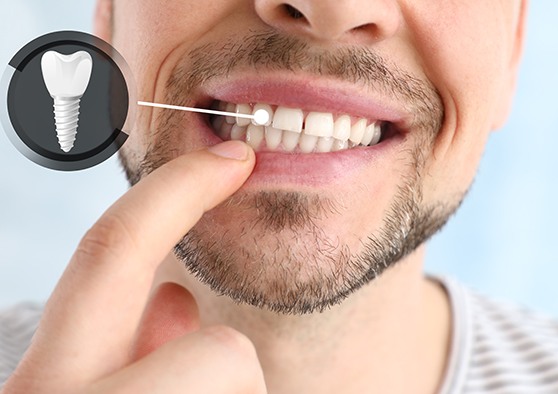
Though dental implants aren’t “real” teeth, you still need to give them proper maintenance. Neglecting the posts puts them at risk of failure, which would disrupt your treatment results. The good news is that Parks Family Dental will gladly share how to care for your new teeth. From there, you can ensure your dental implants in Lincoln last for years to come. Just keep reading or call our office to learn the relevant details.
Make Oral Hygiene a Priority

Dental implants don’t decay, but they do depend on good oral health. The posts can become loose or unstable when nearby teeth or gums have issues. In fact, gum disease is an especially bad problem for them; this infection often makes implants fail or fall out.
Given the points above, you’ll need to practice proper oral hygiene. That means sticking to twice-daily brushing, once-daily flossing, and the occasional mouth rinse. Such habits will keep your implant posts stable and secure.
Eat a Healthy Diet

While you can chew most foods with dental implants, they don’t handle sticky and sugary stuff well. Candies and sweets like caramels and taffy often get wedged in between the posts. Once that happens, a patient is at higher risk of tooth decay and gum disease that causes implant failure.
With all that said, you should follow a mouth-healthy diet after treatment. Having less sugar will reduce the number of harmful bacteria that could threaten your implants. At the same time, foods rich in calcium, phosphorus, and vitamin C are good for treatment results. These products strengthen your gums and leave less debris between the implant posts.
Break Bad Habits
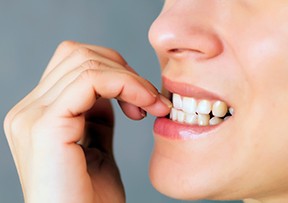
Today’s dental implants are quite durable, as they’re made from titanium and porcelain. Still, even these posts can fail because of bad oral habits. You ought to quit such practices once your implants are placed.
The truth is that several oral habits can make dental implants fail. For example, smoking tobacco tends to delay treatment recovery and stops implants from fusing with your jaw. Chewing hard objects – ice, fingernails, pens, etc. – can also break the newly placed posts. In that case, the resulting chips, cracks, or fractures would make the new teeth fail.
Protect Your Dental Implants
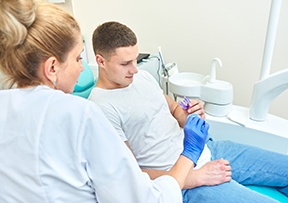
Since dental implants can break under force, you should try to protect them from injuries and accidents. The posts could easily fail otherwise.
One of the best protection methods would be to use a custom mouthguard. This device could shield your posts from tackles and collisions when you play a sport. Similarly, a nightguard worn while asleep could keep you from grinding your implants.
Schedule Regular Dental Checkups

However diligent you are, you can’t look after dental implants alone. You’ll inevitably overlook threats if you don’t have outside help or advice. That being the case, please attend dental checkups as part of your maintenance routines.
Remember, dental checkups are the best form of preventive oral care. Each visit can diagnose and treat small issues before worse ones threaten your implant posts. To that extent, attending checkups every six months or so will ensure your treatment lasts a long time.
Dental Implant FAQs
Can I Take Dental Implants Out?
No, please don’t attempt to take your dental implants out yourself! After osseointegration takes place, the posts will be firmly fused with your jawbone. Even trying to remove or adjust the crown could harm your teeth or gums, as it will be connected to the post via an abutment.
You might be able to remove an implant denture if it’s not designed to be fixed. If this is the case, our team will be sure to let you know – though you’re free to call our office and ask if you’re not sure. Otherwise, it’s safe to assume you’ll have to make an appointment if your dental implant needs to be taken out, replaced, or adjusted.
Are Dental Implants Safe?
Yes – dental implants have an incredibly reliable treatment record, with 95% of cases being successful even after 10 years from initial placement. The oral surgeons we partner with are highly qualified, and are equipped with advanced technology that further promotes safety and precision. Plus, our team will thoroughly examine your mouth and review your health history. If you have an existing problem like gum disease or a thin jawbone, we’ll take steps to correct the issue and help you avoid complications.
Will I Have to Take Off Work for Dental Implant Surgery?
While it will take about three to six months for your mouth to completely heal, most patients find they only need to take a day or two off from work. That said, everyone experiences post-surgery soreness a little differently. We encourage you to listen to your body and get more rest if needed. For patients with physically demanding occupations, we recommend taking three to four days off work. Strenuous activities can slow down the healing process, so the extra time is worth it.
Can I Get Dental Implants If I Smoke?
Possibly. Patients who smoke have received successful dental implant treatments in the past, but you should know that the chemicals in tobacco products do increase your risk of failure. Tobacco can cause several different complications, such as slow healing, interference with osseointegration, infection, and dry socket.
If you smoke or consume other tobacco products, we recommend quitting for at least two weeks before your treatment, and waiting to resume until we can confirm osseointegration is complete. Since smoking can cause oral issues even after your dental implants are placed, though, we strongly encourage you to consider kicking the habit altogether.
Can I Take Dental Implants Out?
No, please don’t attempt to take your dental implants out yourself! After osseointegration takes place, the posts will be firmly fused with your jawbone. Even trying to remove or adjust the crown could harm your teeth or gums, as it will be connected to the post via an abutment.
You might be able to remove an implant denture if it’s not designed to be fixed. If this is the case, our team will be sure to let you know – though you’re free to call our office and ask if you’re not sure. Otherwise, it’s safe to assume you’ll have to make an appointment if your dental implant needs to be taken out, replaced, or adjusted.
Does Getting Dental Implants Hurt?
Not as much as you might think. In fact, many patients report that the treatment discomfort is no more severe than other restorative procedures. Rest assured, your mouth will be numbed with a highly effective anesthetic, and you’ll likely receive sedation before the oral surgeon proceeds.
Are Dental Implants Safe?
Yes – dental implants have an incredibly reliable treatment record, with 95% of cases being successful even after 10 years from initial placement. The oral surgeons we partner with are highly qualified, and are equipped with advanced technology that further promotes safety and precision. Plus, our team will thoroughly examine your mouth and review your health history. If you have an existing problem like gum disease or a thin jawbone, we’ll take steps to correct the issue and help you avoid complications.
Will I Have to Take Off Work for Dental Implant Surgery?
While it will take about three to six months for your mouth to completely heal, most patients find they only need to take a day or two off from work. That said, everyone experiences post-surgery soreness a little differently. We encourage you to listen to your body and get more rest if needed. For patients with physically demanding occupations, we recommend taking three to four days off work. Strenuous activities can slow down the healing process, so the extra time is worth it.
Can I Get Dental Implants If I Smoke?
Possibly. Patients who smoke have received successful dental implant treatments in the past, but you should know that the chemicals in tobacco products do increase your risk of failure. Tobacco can cause several different complications, such as slow healing, interference with osseointegration, infection, and dry socket.
If you smoke or consume other tobacco products, we recommend quitting for at least two weeks before your treatment, and waiting to resume until we can confirm osseointegration is complete.
How Long Do Dental Implants Last?
The lifespan of dental implants depends on the health and lifestyle choices of the patient. It’s important that you are brushing twice, flossing, and rinsing with mouthwash to keep your smile clean and your implants healthy. You should avoid chewing on things that are particularly hard or sticky. Smoking has also been linked to dental implant failure, so it’s a good idea to work to drop this habit. When cared for properly, dental implants can last more than three decades or even the rest of your life. This is several times longer than traditional bridges and dentures.
Am I Too Young to Get Dental Implants?
Most dental professionals will not place dental implants in patients younger than 18. This is because most people’s jaws aren’t fully developed until young adulthood. If dental implants are placed before the jaw has finished growing, they can interfere with bone development, potentially resulting in serious complications. During your consultation with us, we will discuss whether dental implants are the right option for you at this time.
Can I Get Dental Implants If I’m Diabetic?
If your diabetes is under control, your odds of dental implant success are generally comparable to those of nondiabetic patients. Uncontrolled diabetes can slow down the healing process, making it harder for your implants to integrate with your jawbone. If you are interested in getting dental implants, talk to your endocrinologist about getting your blood sugar levels under control beforehand.
Do Dental Implants Decay?
Dental implants are not made from tooth enamel, so they don’t get cavities. However, your remaining natural teeth still can. Your gums can also still become infected, and poor oral hygiene can increase your risk of peri-implantitis. This is the most common reason for dental implant failure. Keeping up excellent oral hygiene is just as important after getting dental implants as before.